
What does a bearing do?
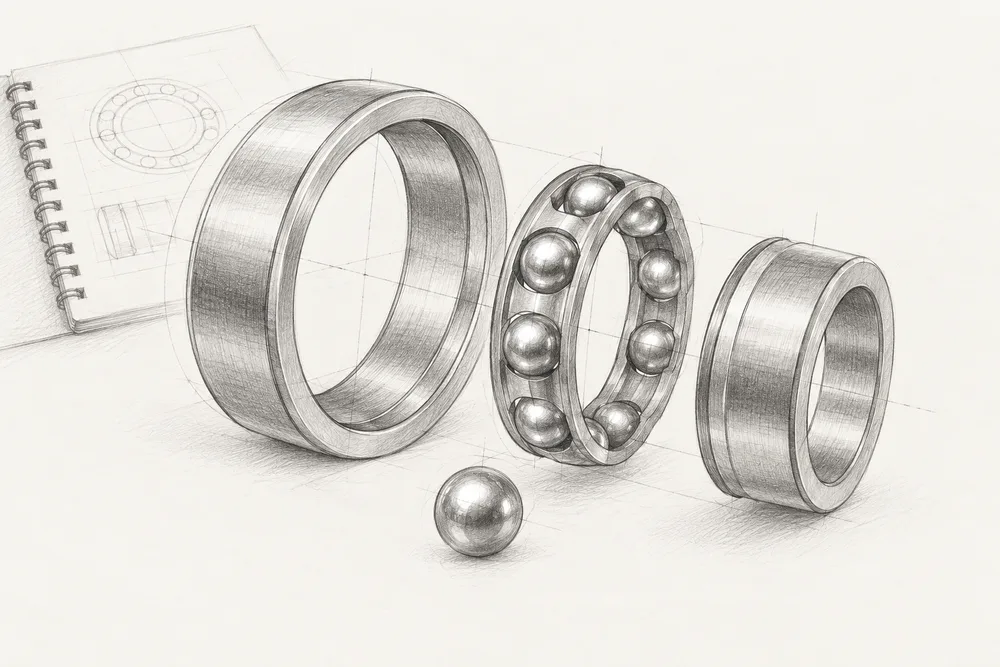
A bearing supports components that move relative to one another and helps reduce friction. In rolling bearings, balls or rollers transfer loads between inner and outer rings.
How do ball and roller bearings differ?
Ball bearings use balls; roller bearings use roller-shaped rolling elements. Selection depends on load magnitude and direction, speed, clearance, stiffness and operating conditions. Neither type is universally better.
What details should an enquiry include?
Start with the complete product code and brand. Include bore, outside diameter, width, quantity and application. For replacement selection, provide speed, temperature, load and lubrication information. Equivalence and suitability require technical confirmation.
Is the bearing code alone enough?
Suffixes matter as well as the basic designation. Seals, shields, internal clearance, precision and other properties may be indicated differently by each manufacturer. Share the full designation and consult manufacturer documentation.
Technical sources
Source links are for technical reference and do not imply an authorised distributor or commercial relationship.
Make a technical enquiry